


“When people search for a ‘stereo system,’ they’re seeking more than just louder or clearer sound—they want every song, every line of dialogue, and every cinematic moment to feel vivid, immersive, and real.”
For some, it’s their first step into home audio. For others, it’s a way to upgrade the living room or rediscover the joy of listening to music the way it was meant to be heard.
Wherever you’re starting from, a stereo system has a way of opening a door—into clearer vocals, deeper bass, and a level of immersion no TV speaker or soundbar can offer.
What Exactly Is a Stereo System?
At its core, a stereo system is beautifully straightforward:
two speakers—one left, one right—working together to create lifelike, dimensional sound.
Because each speaker handles its own channel, this two-channel layout gives music more depth. Instruments occupy their own space, vocals remain clear, and familiar songs reveal layers you may never have noticed.
A well-set-up stereo system doesn't just play audio;
it creates a space—a soundstage—where everything feels more alive.
What Makes Up a Stereo System?
A complete stereo setup includes four elements.
Understanding each of them helps you choose the right system for your home.
1. Speakers: The Character of the System
Speakers shape most of what you hear—tone, clarity, warmth, impact.
Common types include:
-
Bookshelf speakers – compact, versatile, great for small to medium spaces
-
Floor-standing speakers – larger, deeper bass, more room-filling presence
-
Active speakers – with built-in amplification, these speakers don’t require a separate amplifier, making them the simplest choice for beginners or for spaces where additional equipment is impractical. They offer a straightforward setup with fewer cables and less clutter.
-
Passive speakers – require an external amplifier (the approach favored in higher-end audio)

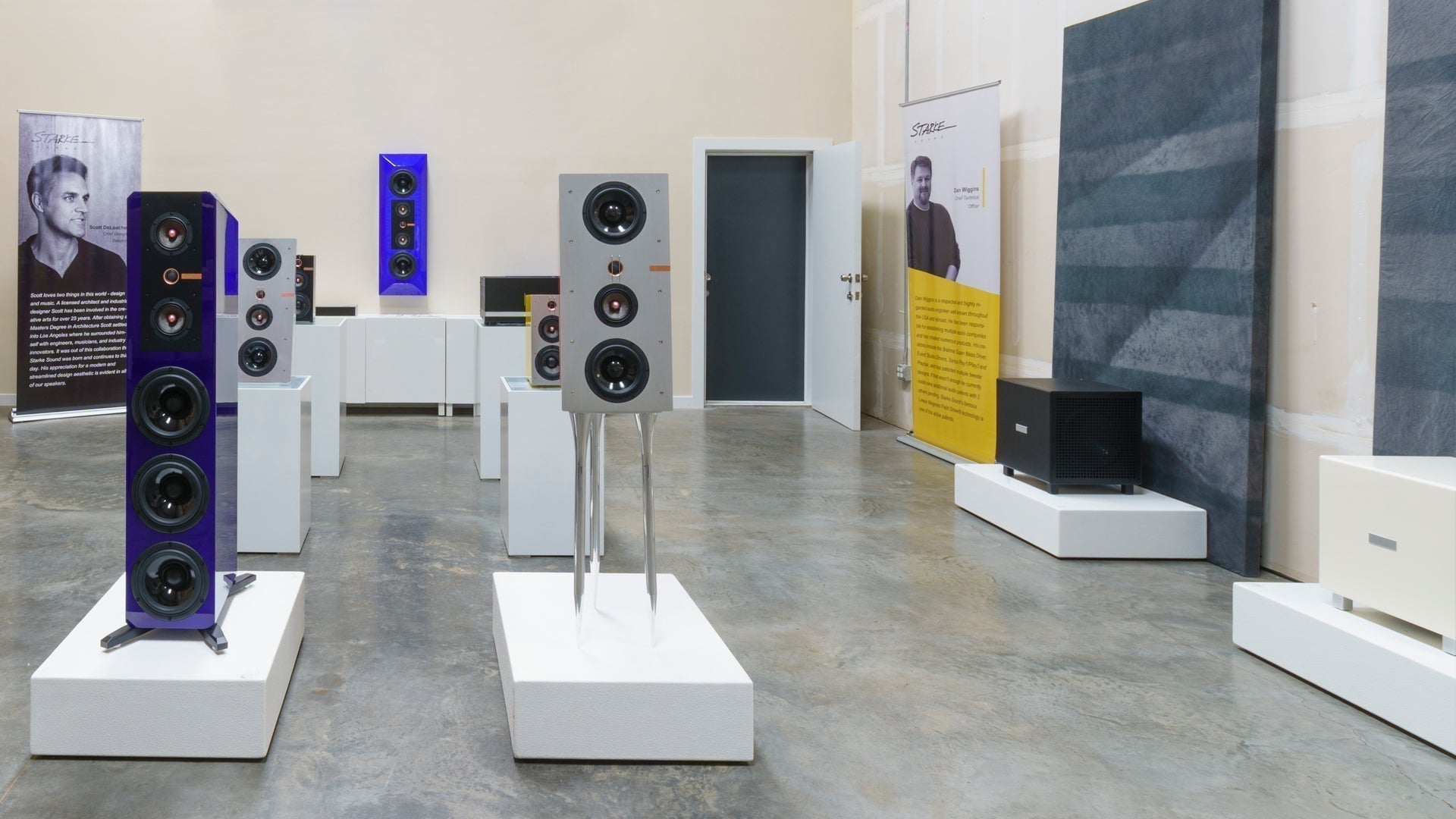
For example, Starke Sound’s lineup ranges from the approachable Brio series to the design-forward Halo series to the performance-driven P Series, offering a wide range of speakers, from compact home setups to high-performance models suitable for stereo listening and immersive home theater; the lineup accommodates every room size and listening preference—delivering all of this with no compromise on performance and a relentless pursuit of technological excellence
2. Amplifier: The Engine of the System
Passive speakers need an amplifier to turn electrical signals into sound. A quality amp:
-
Powers your speakers efficiently
-
Controls volume smoothly
-
Preserves sound clarity and dynamics
Integrated amplifiers are ideal for beginners: simple, reliable, and designed for two-channel listening.
3. Source Devices: Where Your Audio Comes From
Your stereo system can connect to just about anything:
-
Streaming devices or smart hubs
-
Turntables or CD players
-
TVs, computers, phones, and tablets
-
Digital-to-analog converters (DACs) for higher-quality audio
Whether you prefer vinyl, streaming, or movies, a stereo system can handle it all.
4. Cables & Placement: Small Details, Big Difference
Good cables and thoughtful speaker placement make a huge difference. Keep speakers a little away from walls, place them at ear level when seated, and angle them slightly toward your listening spot. Even small adjustments can dramatically improve clarity, bass, and overall balance.
How to Choose a Stereo System
The “best” stereo system isn’t always the largest or most expensive one.
It’s the "right" one that is important, one that works for your space, listening habits, and budget.
1. Start With Your Room Size
Choosing the right stereo system starts with understanding your room.
Small spaces like bedrooms or home offices usually come alive with a pair of well-placed bookshelf speakers and a modest amplifier—something compact, balanced, and easy to position. This is where the Brio series shines, offering clarity and warmth without overwhelming the space.
Most living rooms fall into the medium-size category, where you have a bit more freedom. Larger bookshelf speakers or slim floor-standing models tend to work beautifully here, paired with an amplifier that has enough power to open up the soundstage and give music more presence.
For large rooms or open layouts, scale becomes the key factor. Floor-standing speakers with more power behind them help the sound travel naturally across the space, maintaining detail and dynamics even at a distance.
Systems like the Halo or P Series are built for this kind of environment—room-filling, confident, and capable of delivering wide, cinematic imaging when the space calls for it.
2. Match the System to Your Listening Style
Mostly music
Look for speakers with strong midrange performance and natural imaging.
Music + TV
A good stereo pair can outperform most TV speakers and soundbars for dialogue and detail.
Mixed use / family rooms
Choose versatile, forgiving speakers that are easy to place and visually unobtrusive—this is where lifestyle-oriented speakers shine.
Stereo System vs. Soundbar: What’s the Real Difference?
A stereo system delivers a listening experience far beyond what a soundbar can provide:
-
Two independent speakers: True left/right channels create a precise soundstage, with instruments and vocals positioned naturally across the space.
-
Dedicated drivers and cabinets: Each speaker is designed for specific frequency ranges, providing accurate bass, midrange clarity, and detailed highs.
-
Greater dynamic range and headroom: Handles both subtle passages and powerful peaks without distortion.
-
Upgradeable and flexible: Components, placement, and cables can be optimized over time to improve performance.
-
High-fidelity signal: Minimal processing preserves the integrity of the original recording.
Soundbars often use multiple drivers in a single enclosure and rely on digital signal processing (DSP) to simulate stereo or surround sound. While convenient and compact, this design limits spatial accuracy, compresses dynamic range, and can reduce bass precision compared to a proper stereo setup.
How to Set Up Your Stereo System (A Practical, Beginner-Friendly Guide)
— a calm, simple path to better sound at home
Setting up a stereo system doesn’t have to feel technical or intimidating. Think of it more like arranging a cozy corner in your home—one that happens to make your favorite music sound fuller, warmer, and more alive.
Start with the basics: place your speakers at ear level when you’re seated, and give them a little breathing room from walls so the sound can open up naturally. A simple triangle layout—your two speakers and your listening spot forming three corners—creates an immediate sense of clarity and balance.
Match Your Amplifier: Start by checking your amplifier’s specifications to ensure it provides enough power for your speakers. The right power ensures clean, undistorted sound at both low and high volumes.
There are two common amplifier types in stereo setups:
-
Integrated Amplifier: Combines a power amplifier and a preamplifier in a single unit. The preamp handles input selection, volume control, and signal processing, while the power section drives the speakers. Integrated amps are ideal for beginners or smaller setups because they simplify connections, take up less space, and often include features like tone controls or digital inputs for streaming devices.
-
Separate Amplifiers (Preamplifier + Power Amplifier): In higher-end or specialized systems, the preamp and power amp are separate components. This configuration can provide more precise control over volume, tone, and dynamics, and allows for future upgrades of individual components. However, it requires more space, additional cables, and a slightly more advanced understanding of setup.
Connecting Your System: Once you’ve chosen the amplifier:
-
Plug the power cable from the wall into the amplifier.
-
Connect your speakers to the amplifier using quality speaker cables.
-
Connect your audio source—phone, streamer, TV, turntable, or CD player—to the integrated amplifier or pre-amplifier.
An integrated amplifier makes this process straightforward, while separate components may require extra steps, but both approaches deliver the same goal: driving your speakers to achieve clear, dynamic, and accurate sound.
Once your system is powered on, you can fine-tune speaker placement for optimal imaging and tonal balance. Begin by positioning the speakers so the tweeters are roughly at ear level when seated, forming an equilateral triangle with your listening position.
If possible, maintain a distance of 6–12 inches from rear and side walls to reduce early reflections that can muddy the sound. Adjust the toe-in (the angle the speakers point toward the listening spot) in small increments—typically 5–10 degrees—to focus the stereo image without over-directing the sound. Minor forward or backward adjustments, no more than a few inches, can help balance bass response and clarity.
These refinements ensure a precise, stable soundstage, accurate instrument placement, and consistent tonal fidelity across the listening area.
Examples of Well-Matched Stereo Systems
Here are a few combinations that tend to work well for different types of spaces:
For Small Rooms
-
Bookshelf speakers
-
Compact integrated amplifier
For Living Rooms
-
Larger bookshelf or slim floor-standing speakers
-
Medium-power amplifier
For Dedicated Listening Spaces
-
High-performance floor-standing speakers
-
Quality integrated or separates amplifier
These examples are not strict rules—your exact setup will depend on room acoustics and personal taste.
In reality, different room sizes and layouts interact with speakers in unique ways, and even subtle changes in space can lead to dramatically different listening experiences.
As a professional brand in the audio industry, we can dive much deeper into this topic in future guides, but for today, the goal is simply to give you a practical framework for understanding how room and system matching works.
FAQ:
1. Do I need an amplifier?
Yes, unless your speakers are active with built-in amplification.
2. Are bookshelf speakers enough for a living room?
Often, yes. Many deliver excellent performance in medium-sized rooms.
3. Can a stereo system work with my TV?
Absolutely—via optical, HDMI eARC (with a receiver), or analog output.
4. Is a subwoofer required?
Not required, but helpful for larger rooms or bass-heavy music.
5. Are wireless stereo systems worse than wired ones?
Not always. Wired is more stable, but modern wireless can sound excellent.
6. How much should I spend on my first stereo setup?
$400–$800 is a reasonable starting point for a quality beginner system.
Closing Thoughts
A stereo system transforms your home audio experience. With the right speakers, amplifier, and setup, music feels alive, vocals are natural, and movies become immersive.
Whether you’re exploring your first system or upgrading to high-performance components, the key is choosing a system that fits your space, style, and listening habits.
Starke Sound’s Brio, Halo, and P Series offer well-matched, modern stereo options for any room—each designed to make listening effortless, clear, and enjoyable.
Share:
To celebrate Starke Sound's 12th anniversary, a new breakthrough ( Part II )
What Is a Home Theater? A Beginner’s Guide to Building a Cinema Experience at Home