


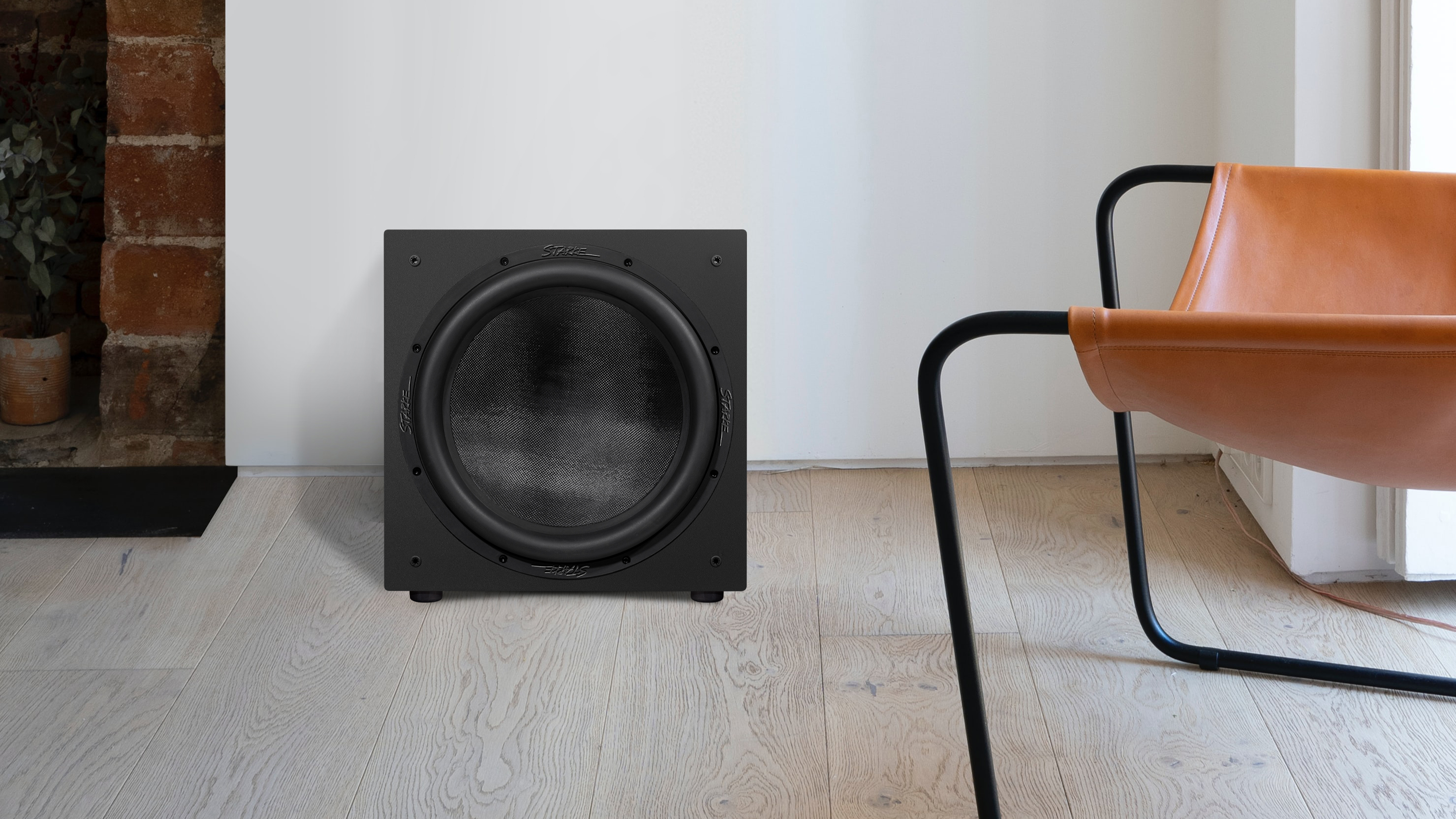
1.What Are Sealed and Ported Subwoofers?
Sealed Subwoofer:
As the name implies, a sealed subwoofer features an airtight cabinet with no openings. The driver is mounted in a completely closed box. When the driver moves, the trapped air inside acts as an "invisible air spring," providing acoustic suspension that controls the driver's motion and helps it snap back into place quickly.
Ported Subwoofer (or Vented Subwoofer):
A ported subwoofer features a cabinet with one or more holes, known as ports or vents. This isn't just a random hole; the port's length and diameter are precisely calculated to utilize the rearward-radiating sound waves from the driver. It reinforces these rear waves to align with the front waves at specific low frequencies, dramatically increasing bass output.
2. Technical Characteristics Compared
Understanding the engineering behind these designs helps explain why they sound so fundamentally different:
- Transient Response & Speed: Because of the damping effect of the internal "air spring," the driver in a sealed subwoofer starts and stops incredibly fast. This results in superb transient response, delivering tight, articulate, and clean bass.
- Low-Frequency Extension & Roll-off: Sealed subwoofers have a relatively shallow low-frequency roll-off (typically 12dB/octave), meaning they still retain significant detail at ultra-low frequencies (below 20Hz). A ported subwoofer, on the other hand, boasts massive output around its specific tuning frequency. However, once it dips below that tuning frequency, the output drops off a cliff abruptly (typically 24dB/octave).
- Efficiency & Sound Pressure Level (SPL): Given the same amplifier power and driver size, a ported subwoofer will generate a significantly higher SPL around its tuning frequency than a sealed one. Simply put, ported subs are much better at delivering that "earth-shattering" physical rumble.
3. What Does This Mean for the Listener?
In a real-world listening environment, the differences are night and day:
- Music vs. Movies: If you are a hardcore audiophile looking for the tight, punchy, and rhythmic bass of a kick drum or bass guitar, a sealed subwoofer is your top choice. If you are a pure movie fanatic who craves the sustained, chest-pounding rumble of explosions, earthquakes, and spaceship engines, a ported subwoofer will deliver that visceral thrill.
- Room Placement: Sealed subs generally feature smaller footprints, making them highly living-room friendly and less prone to exciting negative room modes. Ported subs are usually physically larger to accommodate the port tube and require more careful placement to avoid "boomy" bass.
4. The Starke Sound SW15 VS SW15P. What's the difference ?
As the two star 15-inch subwoofers in the Starke Sound lineup, the SW15 (Sealed) and SW15P (Ported) perfectly illustrate the pinnacle of both design philosophies.
- SW15 (Sealed Subwoofer): This is a performance beast obsessed with extreme speed and precision. It can unleash astonishing energy in a fraction of a second and stop on a dime. Its highly textured and layered low-frequency reproduction makes it ideal for a mixed-use system (50% music, 50% movies). Plus, its relatively compact size allows it to blend easily into a standard living room.
- SW15P (Ported Subwoofer): If your goal is to absolutely pressurize and "destroy" your room, the SW15P is your ultimate weapon. Thanks to its meticulously tuned port system, the SW15P delivers terrifying SPL output in the 20Hz-30Hz range—the sweet spot for cinematic LFE (Low-Frequency Effects). Designed for large, dedicated home theaters, it delivers wave after wave of physical, tactile massage.
5. Why is the SW15 the Best Subwoofer Around $600?
The $600 price point is notoriously competitive, yet the SW15 is widely recognized as the undisputed "King of Value." Here is why:
-
Class-Defying 15-Inch Driver: Most competitors at this price offer 10-inch or 12-inch drivers. Starke Sound accomplished the rare feat of packing a high-performance 15-inch driver into a $600 sub, providing a crushing advantage in air-moving capability.
2. Glass Fiber Sandwich Cone: This premium material ensures the cone is incredibly light (for blistering speed) yet exceptionally rigid (minimizing distortion during massive dynamic swings).
3. High-Power DSP Amplifier: The built-in, highly efficient amplifier paired with custom DSP tuning ensures this 15-inch sealed beast not only digs deep but maintains absolute control over the driver.
4. Unbeatable Texture: At this price, it’s incredibly rare to find a subwoofer that handles the musical groove of The Greatest Showman and the thumping footsteps of Godzilla with equal mastery.
6. What Users and the Media Are Saying: A True Game Changer
In top-tier global AV communities (such as AVS Forum) and across professional YouTube review channels and home theater magazines, Starke Sound’s subwoofer lineup (especially the SW12 and SW15 series) hasn't just garnered positive reviews—it has been universally hailed as a "Game Changer" in the mid-tier market.
The praise generally focuses on three core dimensions:
- "Punching Way Above Its Weight Class": Many veteran reviewers point out that while other brands offer compromised entry-level specs in the $600 red ocean market, the SW15 drops in a massive 15-inch driver with a terrifying magnet structure and iron-grip control. Its energy and depth are frequently compared to competitors costing $1000 or more.
- "Stunning Transient Response": Media reviews repeatedly emphasize its "texture." For the sealed subwoofer (SW15), users marvel at its crisp, clean delivery on orchestral timpani or rock bass—"zero overhang, no muddy lingering." Meanwhile, for the ported subwoofer (SW15P), home theater junkies are blown away by the endless, sofa-shaking, deep-sea energy it unleashes during ultra-low frequency sweeps in Dune or *Blade Runner 2049*.
- "Uncompromising Build and Materials": Unlike the cheap vinyl-wrapped MDF boxes common at this price, Starke Sound’s highly recognizable front baffle design, rigid internal bracing, and custom glass-fiber sandwich cones are praised for successfully bringing Hi-End audio tech and craftsmanship down to an accessible price point. It doesn't just sound like a premium sub; it looks like a piece of fine AV furniture.
7. Advanced Topic: Can You Mix a Sealed and Ported Subwoofer in a Multi-Sub Setup?
For enthusiasts chasing the ultimate soundstage and even bass response across all seating positions, a multi-sub setup (dual or quad subs) is the holy grail. But can you mix an SW15 (sealed) and an SW15P (ported) in the same room?
The answer depends entirely on your system: In a traditional Hi-Fi setup, it is strongly discouraged. However, in a modern, high-end home theater with advanced processing, it can be done—and the results can be spectacular.
1. Pure 2-Channel Hi-Fi Systems: Strongly Discouraged
In traditional stereo setups lacking advanced bass management, mixing a sealed subwoofer and a ported subwoofer is a recipe for disaster. Because they have vastly different phase responses and group delay characteristics, blending them in the same room naturally leads to phase cancellation. This will make your bass sound muddy and create severe "nulls" (dead spots) at certain frequencies.
2. Modern Home Theaters (with powerful AV Processors): Yes, with Massive Potential!
If you own an AV pre-processor equipped with heavy-duty DSP and advanced room correction software (such as Dirac Live, Audyssey MultEQ XT32, Trinnov, or Anthem ARC), mixing sealed and ported subs is not only possible but can offer the best of both worlds. However, this requires expert calibration:
-
Precision Frequency Routing: You can use the processor to assign specific roles. For example, route the ultra-low LFE (Low-Frequency Effects like 20Hz-40Hz explosions and tremors) to the massive output capability of the SW15P (ported subwoofer) to exploit its tuning frequency. Meanwhile, route the 40Hz-120Hz mid-bass frequencies (gunshots, punchy impacts, bass instruments) to the lightning-fast SW15 (sealed subwoofer) for maximum chest-thumping transient attack.
- Strategic Placement and Phase Alignment: Place the ported SW15P in a corner (corner placement) to maximize "room gain" for bottomless sub-bass. Conversely, place the sealed SW15 near-field (right behind or beside the listening position) to deliver direct, tactile impact. Finally, let the processor's powerful DSP handle the acoustic measurements, delay calibration, and phase alignment to seamlessly stitch these two vastly different bass profiles into one cohesive, omnipotent soundfield.
Conclusion:
Mixing a sealed and ported subwoofer is a double-edged sword. If you lack advanced DSP, stick to the golden rule of consistency (all sealed or all ported). But if you have the processing power and the tuning know-how, combining the SW15 and SW15P will unlock a pinnacle home theater bass experience unlike anything else.
Check out more reviews on Starke Sound SW15
Share:
Top reasons why pros and medias favorite Starke Sound Beta5